Smoke Chamber Parging
NFPA 211 says the chamber above your firebox should be smooth. In most North Texas homes, it never was.
 Texan Flue Chimney
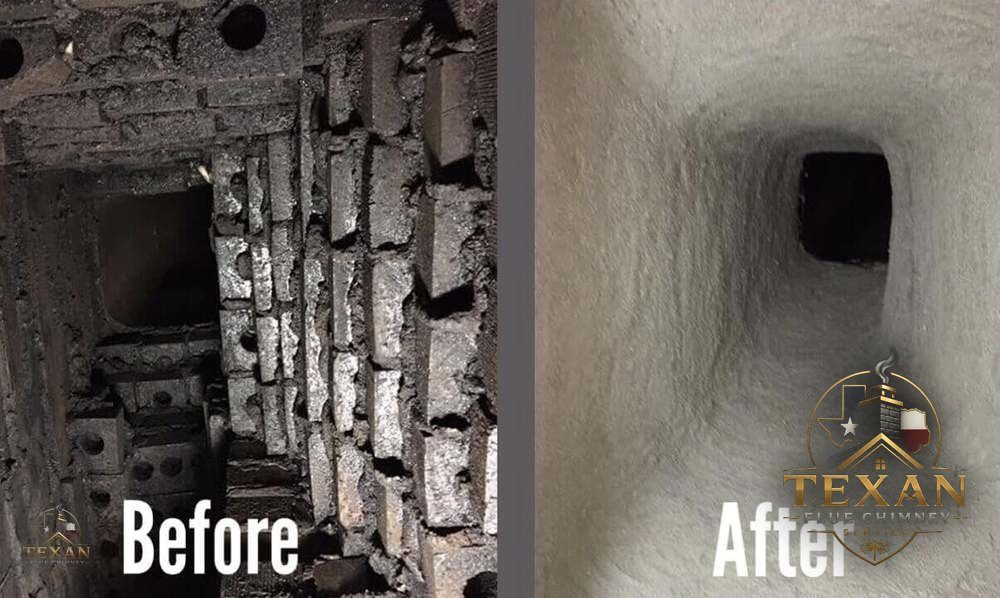
Stepped brick is a design flaw the code already fixed.
The smoke chamber is the funnel between the top of your firebox and the bottom of the flue. In most masonry fireplaces it is built from corbelled brick — courses stepped inward like an upside-down staircase. It is a fast way to build the shape. It is also a poor way to move smoke.
Every stepped ledge does two harmful things at once. It breaks up the draft, creating turbulence exactly where the smoke needs to accelerate, and it catches creosote, giving condensing tar a shelf to settle on inches above the hottest part of the fireplace. NFPA 211 addresses both by requiring the chamber walls to be parged smooth.
What parging actually is
Parging is a coat of insulating refractory mortar applied over the stepped brick, filling the steps and turning the staircase into a continuous, sloped funnel. It is not cosmetic. A smooth chamber draws better, accumulates far less creosote, and puts an additional heat barrier between the fire and the wood framing that sits behind the fireplace wall in most homes.
Why so many DFW chambers need it
Two reasons. Many chimneys built through the seventies, eighties and nineties were simply never parged — the step was skipped, and nothing about the fireplace looked wrong from the room. And where parging does exist, North Texas works against it: expansive clay soil moves foundations and stresses masonry, while freeze–thaw cycling opens hairline cracks that widen every winter.
Cleaning comes first, always
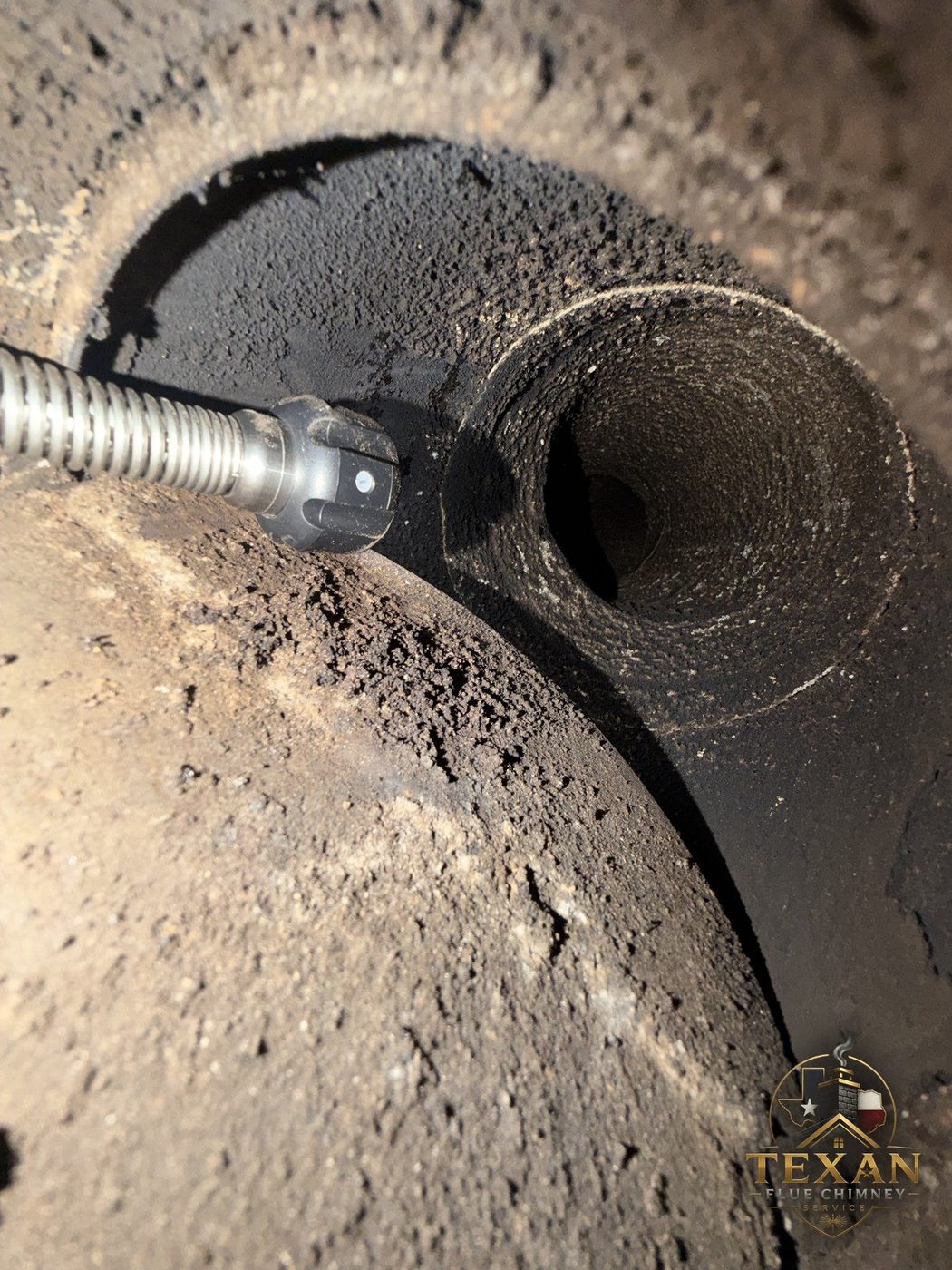
Parging can only bond to clean masonry, and the chamber has to be clean before anyone can judge what it needs. That is why this work always follows smoke chamber cleaning — we clean, photograph the bare brick, and show you the actual condition before quoting anything. If the firebox below also shows failing joints, firebox repair is usually worth doing in the same visit.
 Texan Flue Chimney
Signs your chamber needs coating.
Visible stepped brick
If you can see a staircase of bare brick ledges above the damper, the chamber was never parged.
Smoke pushing into the room
A rough, turbulent chamber is one of the most common causes of a fireplace that will not draw.
Rapid creosote return
If buildup comes back quickly after a sweep, the ledges are catching what the flue should be carrying away.
Crumbling mortar above the damper
Sandy debris on the smoke shelf means the existing coating or joints are breaking down.
Cracks in the existing parge
Clay-soil movement and freeze–thaw open the coating, and once cracked it stops acting as a heat barrier.
An inspection flagged it
A Level 2 camera scan routinely finds unparged chambers that no one had ever looked at.
Clean, assess, coat, document.
Clean the Chamber
Dedicated chamber tools remove creosote from every corbelled ledge and the smoke shelf under HEPA containment.
Photograph Bare Brick
With the masonry clean we photograph the true condition and measure what coverage the chamber needs.
Apply the Parge Coat
Insulating refractory mortar is worked over the stepped brick, filling the ledges into a smooth, sloped funnel.
Cure & Verify
We confirm coverage against NFPA 211, photograph the finished chamber and tell you when the fireplace is ready to burn.
Parging, answered.
How much does smoke chamber parging cost in DFW?
It depends on chamber size, how much of the existing coating survives and access through the firebox. We clean and photograph first, then give you a free written estimate — no figure before we have seen the actual masonry.
Is parging really required, or is it optional?
NFPA 211 calls for smoke chamber walls to be smooth-parged. It is the standard the industry and insurers reference. Plenty of fireplaces run for years without it, which is precisely why the creosote and draft problems are so common.
Will parging fix a fireplace that smokes into the room?
Often it is a significant part of the fix. A rough chamber creates turbulence that disrupts draft. That said, smoking has several possible causes — flue sizing, chimney height, house pressure — so we diagnose before promising a result.
How long before I can use the fireplace?
Refractory mortar needs time to cure properly. We give you a specific window at the end of the job, typically a few days, and we would rather you wait than crack a fresh coat with the first fire.
Can this be done at the same time as a sweep?
Yes, and it usually should be. The chamber must be clean to be coated, so cleaning and parging are natural companions in one scheduled visit.
The chamber, start to finish.
Clean the part your last sweep skipped.
Book a free estimate — we'll photograph your smoke chamber and give you an exact, upfront price.
(469) 771-7000One call keeps the fire where it belongs.