Chase & Siding Repair
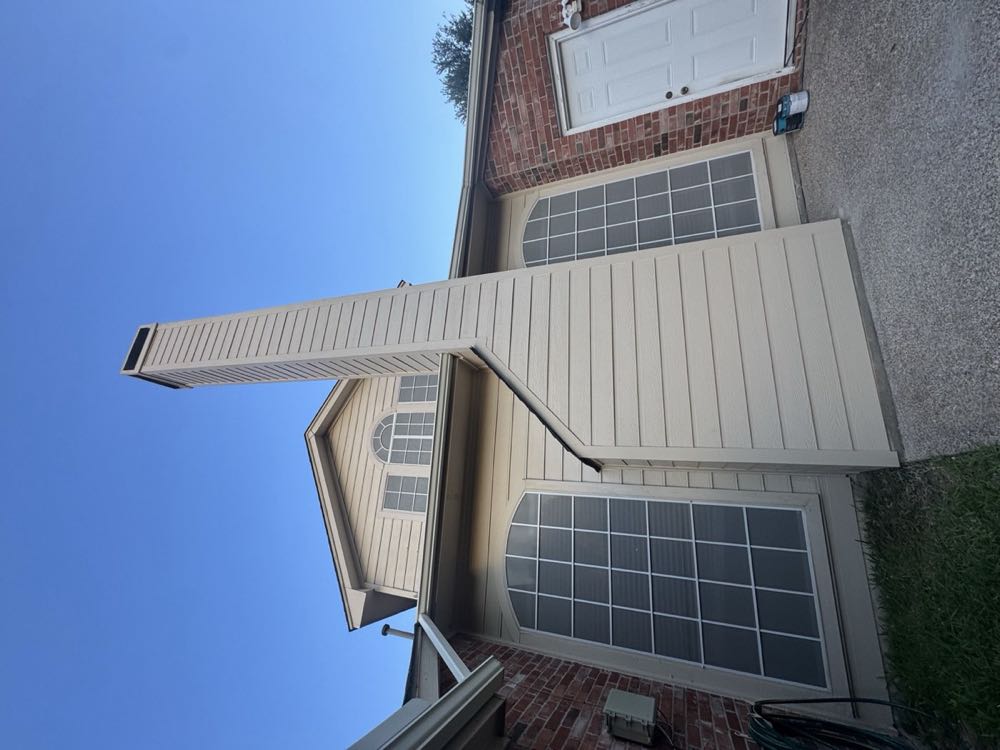
A framed chimney chase rots from the top down, and by the time the siding shows it, the water has been working for years.
 Texan Flue Chimney
The siding is the symptom. The cover is the cause.
A large share of Dallas–Fort Worth homes built from the eighties onward do not have masonry chimneys at all. They have a chase — a wood-framed box, sheathed and sided to match the house, with a metal top called a chase cover. It looks like a chimney from the street and behaves nothing like one.
Masonry tolerates water. A framed chase does not. The moment the cover fails, water reaches sheathing, framing and insulation, and it keeps going because nothing inside the chase can dry.
Why builder-grade covers fail
Most original chase covers were galvanized steel, flat, and slightly undersized. Flat means standing water after every North Texas storm. Galvanized means rust, usually within ten to fifteen years. What follows is predictable: rust streaks down the siding, then soft trim at the corners, then rot in the sheathing behind it. Replacing the siding without correcting the cover simply restarts the clock.
What we actually repair
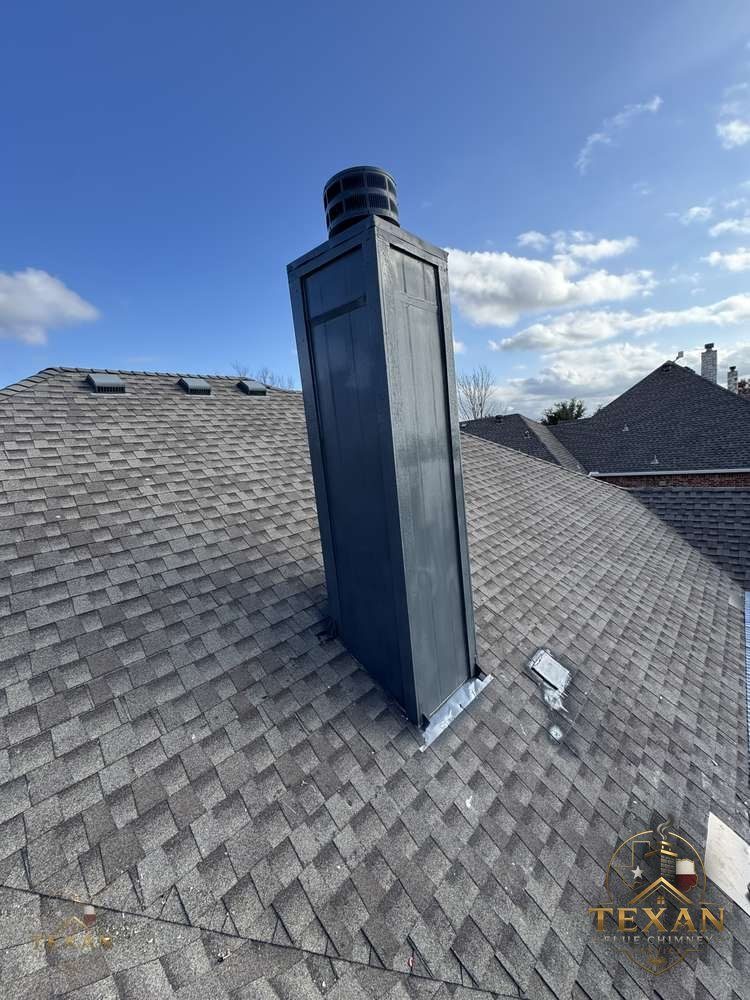
We open the affected area, establish how far the damage travelled, and replace what has failed — siding, trim, sheathing and framing where necessary. Then we correct the source, which almost always means a properly sized custom chase cover with a cross-break for drainage, correct overhang and a drip edge, fabricated in stainless or copper rather than galvanized steel.
Do not assume it is only the outside
Water that reached the framing also reached the flue system inside the chase. Before closing anything up we camera-scan the flue and check the liner, because a chase repair that seals rusted flue components inside a beautifully rebuilt box helps nobody. If the water has been running for a while, this belongs with a full leak diagnosis.
 Texan Flue Chimney
Signs your chase is failing.
Rust streaks down the siding
Orange staining running from the top is the chase cover telling you it has already failed.
Soft or dark trim at the corners
Press the trim. If it gives, water has been in the sheathing behind it for more than one season.
Standing water on the chase top
A flat cover with no cross-break holds water after every storm until it finds a seam.
Peeling paint high on the chase
Paint lifts where moisture is escaping the sheathing from behind, not from weather on the surface.
Visible gaps at the cover edge
An undersized cover leaves the top of the framing exposed directly to rain.
Wasps or birds getting inside
Anything finding its way into the chase is using an opening water found first.
Correct the cause, then rebuild.
Assess the Extent
We photograph the chase top, siding and trim, and probe to establish how far the water travelled into the structure.
Check Inside the Chase
A camera scan of the flue and a look at the liner and framing confirms whether the damage is only skin deep.
Rebuild What Failed
Rotted sheathing, framing, trim and siding are replaced and matched to the existing exterior.
Cap It Properly
A custom stainless or copper cover with cross-break drainage, correct overhang and drip edge replaces the piece that started it.
Chase repair, answered.
How much does chase siding repair cost in DFW?
It comes down to how far the rot travelled, chase height and roof access. We open and assess before quoting, then give you a free written estimate with photographs of what we found.
Can I just replace the chase cover and leave the siding?
If the siding and sheathing are still sound, yes — and that is the ideal time to do it. Once trim has gone soft, replacing only the cover leaves damaged material sealed inside the chase.
Is this a chimney job or a siding job?
Both, which is exactly why it gets neglected. Siding contractors do not correct chase covers and roofers do not open framing. We handle the chase as one system, cover and cladding together.
What material should the new cover be?
Stainless steel for almost every case, copper where the home warrants it. Both outlast galvanized steel by decades. The critical details are the cross-break for drainage, an overhang past the chase, and a drip edge.
How do I know if the framing is rotted or just the trim?
You often cannot from the ground, which is the problem. Soft trim is a reliable indicator that moisture has been present long enough to reach further, and only opening it up settles it.
The chase, top to bottom.
Clean the part your last sweep skipped.
Book a free estimate — we'll photograph your smoke chamber and give you an exact, upfront price.
(469) 771-7000One call keeps the fire where it belongs.