Chimney Leak Repair
A leaking chimney has one real entry point and five suspects. We find which one before anyone opens a tube of sealant.
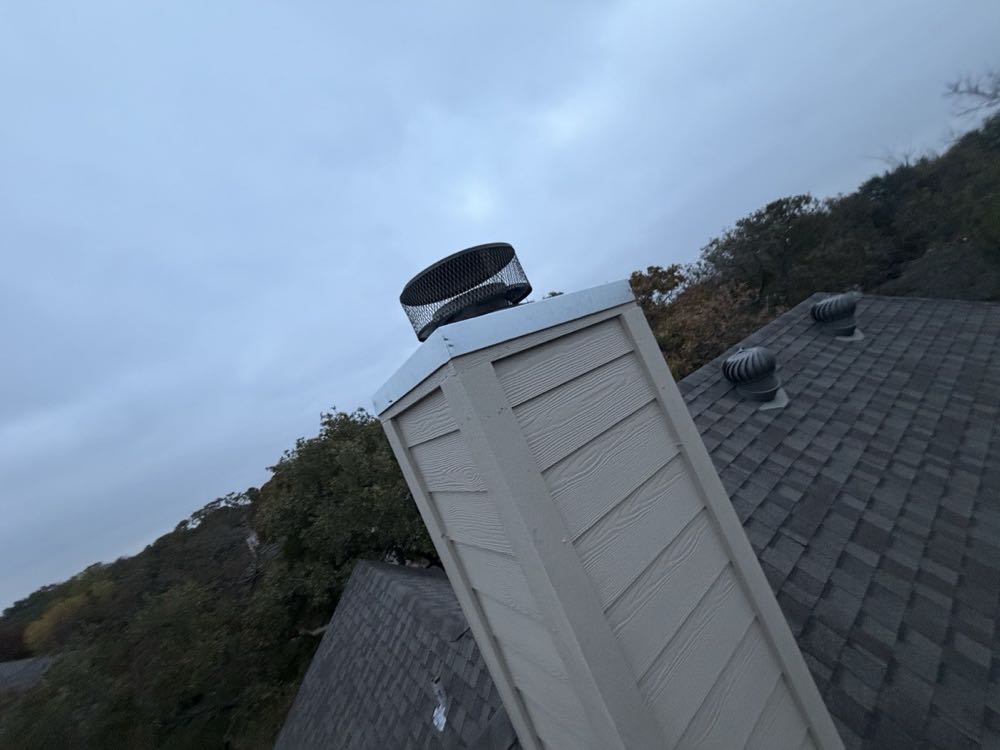
 Texan Flue Chimney
Water is getting in. The question is where.
Almost every chimney leak in Dallas–Fort Worth traces back to one of five failures, and they look identical from inside the house. A damp patch on the ceiling, a musty smell after rain, white staining on the brick, water pooling in the firebox — the symptom tells you almost nothing about the cause.
That is why the common fix fails. A contractor sees a wet chimney, coats the crown or runs a bead of caulk along the flashing, and the leak returns with the next storm because the water was never coming from there. Diagnosis first is not an upsell — it is the only thing that makes the repair permanent.
The five suspects
The crown. The concrete slab on top cracks under North Texas freeze–thaw and hail. Water runs straight down the interior of the masonry, often surfacing on a ceiling several feet from the chimney.
The flashing. The metal seal where the chimney meets the roof is the single most common leak point on any roof, and the one most often installed wrong. Chimney flashing repair is a distinct job from roofing.
A missing or failed cap. An uncapped flue is an open drain into the heart of the chimney. Rain falls directly onto the smoke shelf and damper, which is why an uncapped chimney rusts its damper shut within a few seasons.
Porous or spalling brick. Brick absorbs water. Once mortar joints have opened or the face has begun to flake, the masonry itself becomes the leak — and no amount of caulk fixes that. This is where waterproofing and tuckpointing do the real work.
A failed chase cover. On framed chimneys, a rusted or improperly pitched metal top holds standing water until it finds a seam. We see this constantly on builder-grade DFW homes from the nineties and early two-thousands.
How we actually find it
We photograph the crown, flashing, cap and masonry from the roof, camera-scan the flue interior, and check the firebox, damper and smoke shelf from inside. You get the photographs and a written explanation of which failure is producing the water — and if more than one is contributing, you learn that too, in writing, before any work is scheduled.
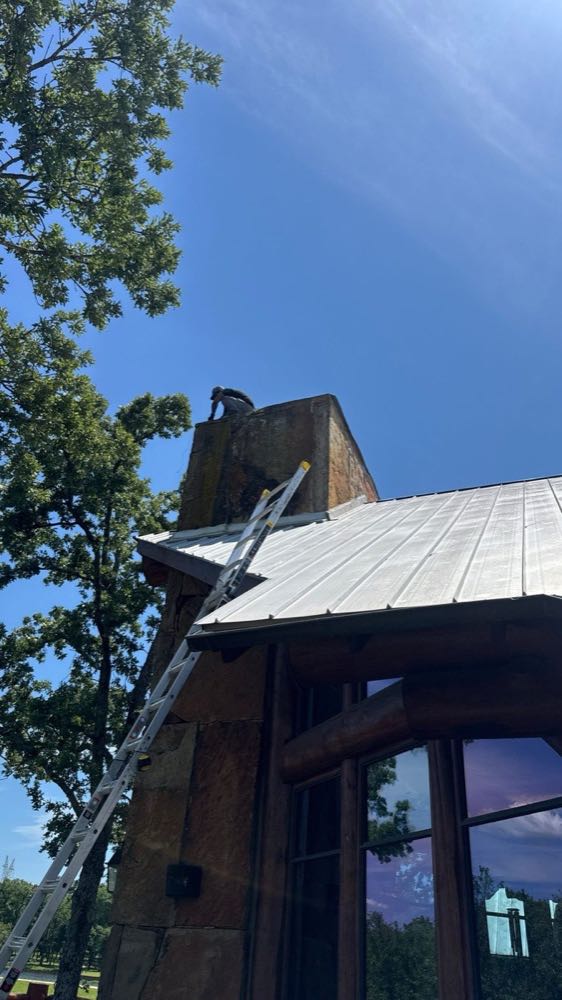 Texan Flue Chimney
Signs your chimney is the source.
Water in the firebox
The most direct evidence there is. Water reaching the firebox usually means the cap or the crown, not the roof.
Ceiling stains near the chimney
A brown ring on the ceiling within a few feet of the chase almost always points to flashing.
Musty smell after rain
Damp masonry and wet creosote produce a sharp campfire odor that intensifies in DFW humidity.
White chalky staining on brick
Efflorescence — mineral salts carried out by water moving through the masonry from the inside.
Damp or bubbling drywall
Paint lifting or drywall softening on the wall beside the fireplace means water has been travelling for a while.
A damper that will not move
A rusted, seized damper is proof water has been falling down an uncapped flue for seasons.
Find it, prove it, then fix it.
Full Exterior Survey
We photograph the crown, flashing, cap, chase cover and masonry from the roof so you see the same evidence we do.
Interior & Camera Check
A camera scan of the flue plus inspection of the firebox, damper and smoke shelf tells us where water has been travelling.
Written Diagnosis
You get a plain explanation of which component is failing, with photos, and a free written estimate for the specific repair.
Targeted Repair
We fix the actual entry point — crown, flashing, cap, chase cover or masonry — and document the finished work.
Chimney leaks, answered.
How much does chimney leak repair cost in DFW?
It depends entirely on which component failed. Resealing a crown and rebuilding failed flashing are very different jobs, and until we have looked, any number would be a guess. We inspect, photograph what we find, and give you a free written estimate before any work is scheduled.
My roofer already looked at it and the leak came back. Why?
This is the most common story we hear. Roofers work on roofs, and chimney flashing is a chimney system component that also happens to sit on one. If the water is actually entering through a cracked crown or porous brick, no amount of roof work will stop it.
Can you tell where the leak is without tearing anything apart?
In almost every case, yes. Between a roof-level survey, a camera scan of the flue and an interior inspection of the firebox and damper, the entry point becomes clear. Destructive investigation is a last resort, not a starting point.
Is waterproofing the same as fixing a leak?
No, and treating it that way causes damage. Waterproofing is a breathable sealant for masonry that is otherwise sound. Applying it over a cracked crown or failed flashing traps moisture inside the chimney and accelerates the deterioration.
How fast can you look at it?
We schedule leak calls quickly, particularly after a DFW storm cycle, because active water intrusion gets worse every time it rains. Call (469) 771-7000 and we will find you the earliest slot available.
What a leak repair usually involves.
Clean the part your last sweep skipped.
Book a free estimate — we'll photograph your smoke chamber and give you an exact, upfront price.
(469) 771-7000One call keeps the fire where it belongs.