
Custom Chase Cover Fabrication
Measured on your roof, fabricated in our own metal shop — stainless and powder-coated chase covers with cross-breaks and drip edges that shed North Texas rain for decades, not seasons.
What is a chase cover?
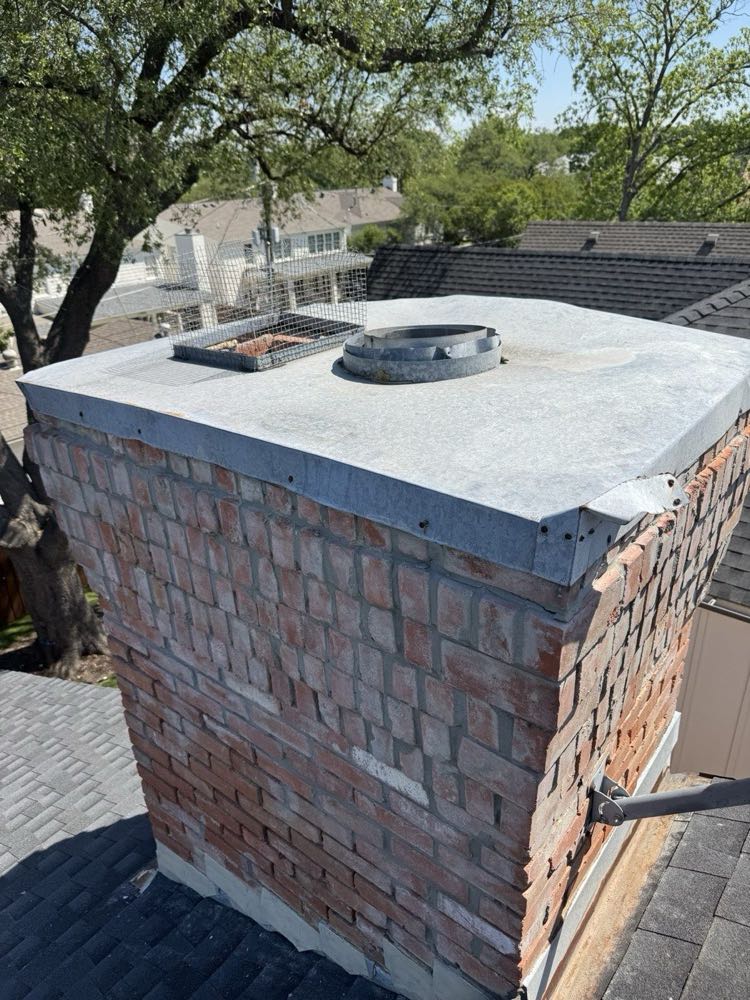
Not every chimney is brick. Many DFW homes — especially those built from the 1980s on — have a chase: a wood-framed box wrapped in siding, stucco or stone veneer that encloses a factory-built fireplace flue. Where a masonry chimney has a concrete crown on top, a chase has a chase cover: a metal pan that caps the entire top of the box, with a collar where the flue pipe passes through. That single sheet of metal is the only thing standing between Texas weather and the wooden framing, insulation and fireplace unit inside.
Why builder-grade covers fail
The cover your builder installed was almost certainly the cheapest one that passed inspection: thin galvanized steel, cut dead flat. Flat is the problem. Rain ponds in the middle of the pan, the standing water slowly chews through the zinc coating, and rust takes over from there. First come the telltale orange streaks bleeding down the siding below the cover — then pinholes, then a steady leak dripping onto the framing and the top of your fireplace. By the time water shows up inside, the rot upstairs has usually been running for years. In our climate, where spring downpours alternate with hail and hundred-degree metal-warping heat, a galvanized cover rarely makes it past a decade.
Fabricated in-house, fitted to the inch
This is the work Texan Flue built its reputation on. We don't order a "close enough" cover from a catalog — we template your chase on the roof and fabricate the cover in our own metal shop from heavy-gauge stainless steel or powder-coated steel in the color of your choice. Every cover gets a cross-break — a shallow X-bend that crowns the center so water sheets off instead of ponding — plus hemmed skirts and drip edges that throw runoff clear of the siding, and a tall storm collar sealed around each flue. Because we control fabrication, odd dimensions, multiple flues and custom colors are routine, and turnaround is days rather than the weeks an out-of-state order takes. Topped with a matching chimney cap, the whole chase is sealed for the long haul.
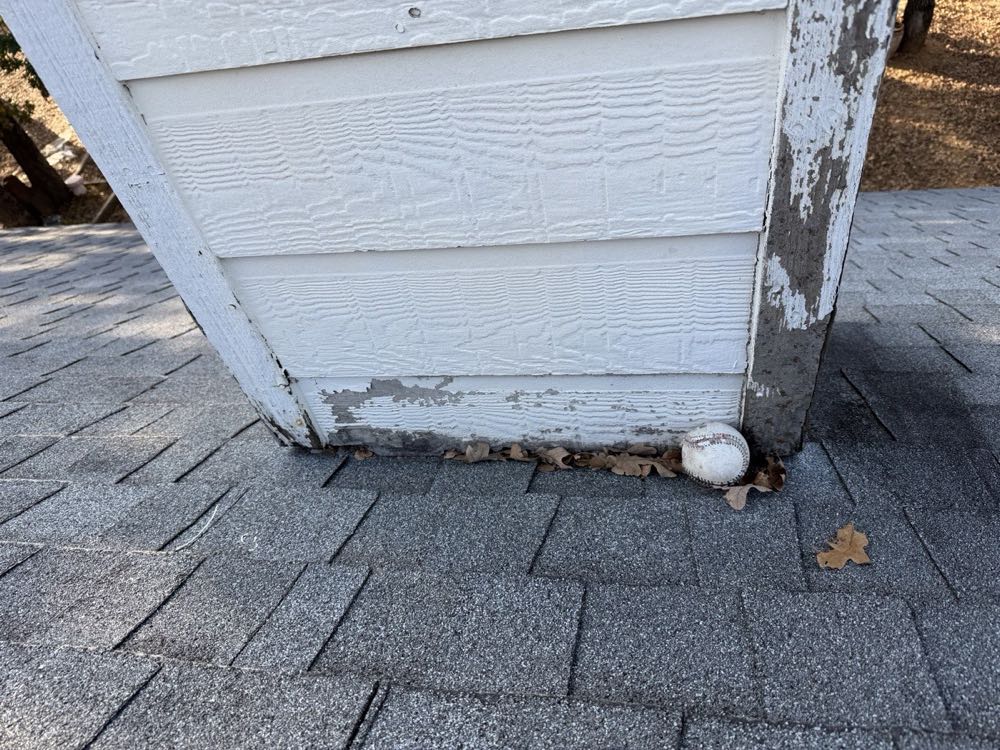
Signs your chase cover is failing.
Rust stains on the siding
Orange streaks running down from the top of the chase are the classic tell — the cover is corroding and washing rust downhill.
Ponding water on top
A flat cover that holds puddles after rain is eating itself alive. Standing water is what kills galvanized steel.
Dripping inside the fireplace
Water reaching the firebox of a factory-built fireplace almost always enters through a failed cover or collar seal.
Soft or stained siding
Bubbling paint, swollen trim or dark stains near the top of the chase point to water already inside the framing.
Visible pinholes or seams opening
Daylight through the pan, lifted seams or failed caulk beads mean the cover is past patching.
Cover dented or lifted after hail
DFW hail flattens cross-breaks and pops fasteners — damage that's often claimable alongside your roof.
Templated, fabricated, installed — all by one shop.
$49 Inspection
We check the existing cover, the flue collar and the chase framing for water damage, with photos of everything we find.
Template & Measure
Exact length, width, skirt height and flue positions are templated on the roof — the cover will fit your chase, not a spec sheet.
In-House Fabrication
Cut, cross-broken, hemmed and finished in our own metal shop in stainless or your powder-coat color — usually within days.
Sealed Installation
Set, fastened and sealed at every collar and edge, then water-tested — with photos of the finished cover before we leave.
Chase covers, answered.
How much does a custom chase cover cost in DFW?
Custom-fabricated chase covers typically run $600–$1,500 installed in Dallas–Fort Worth, depending on chase size, the number of flue collars and the metal you choose — stainless steel or powder-coated. You approve an exact, all-in price after a free measurement before we cut any metal.
What's wrong with the chase cover my builder installed?
Most builder-grade covers are thin galvanized steel cut flat, with no cross-break. The flat pan ponds water, the standing water eats through the zinc coating, and within five to ten years the cover rusts through and starts leaking into the chase. The rust stains running down your siding are the cover telling on itself.
What is a cross-break and why does it matter?
A cross-break is a shallow X-shaped bend pressed into the top of the cover that raises its center slightly, so rain sheets off to the edges instead of ponding in the middle. Combined with hemmed drip edges that kick water clear of the siding, it's the difference between a cover that lasts decades and one that becomes a rust pan.
Stainless steel or powder-coated — which should I pick?
Stainless is the workhorse: it won't rust, handles DFW hail and heat, and typically outlasts the roof around it. Powder-coated covers add a color-matched finish — black, bronze or a custom tone that disappears into your roofline. Both are fabricated in our own shop to the same standard.
How long does fabrication and installation take?
We template your chase on the first visit, fabricate the cover in our own shop — usually within a few days, since we don't wait on an out-of-state supplier — and install it in about an hour on the return trip, sealed around every flue collar and fastener.
Often paired with a new chase cover.
Stop the rust before it reaches the framing.
Book a $49 inspection and get an exact, upfront price on a cover fabricated to your chase — not a catalog size.
(469) 980-1178One call keeps the fire where it belongs.