Gas Log Installation
Vented or ventless, the right log set turns a neglected firebox into the easiest fire you'll ever light. We compare your options honestly, size the set to your firebox, and make every gas connection to code — tested before the first burn.
What are gas logs — and which kind is right for you?
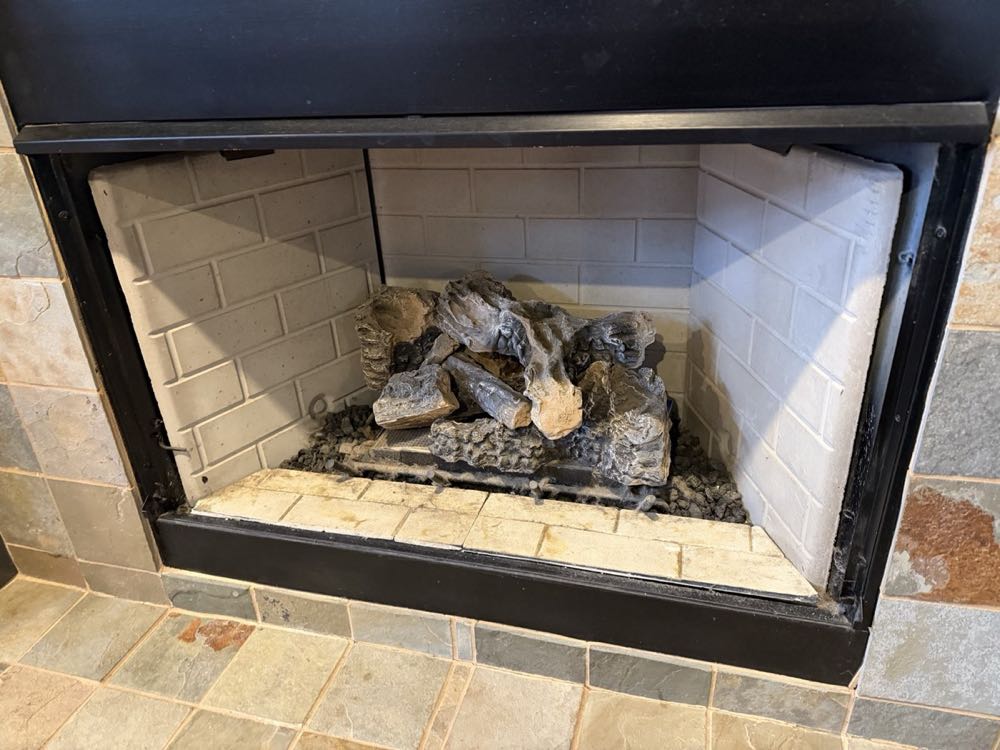
Gas logs are ceramic or refractory-cement logs arranged over a gas burner inside your existing fireplace. Flip a switch and you have a fire — no hauling wood, no ash, no waiting for the flue to warm up. The decision that matters is the one made before anything is bought: vented or ventless. They're different appliances with different rules, and the honest comparison is where we start.
Vented logs: the realistic flame
Vented sets burn like a wood fire — tall, yellow, dancing flames wrapped around realistic logs. The trade-off is efficiency: they exhaust up the chimney, taking most of their heat with them, so think of them as ambiance rather than a heater. Because they produce real combustion gases, code requires the damper to be permanently clamped open, and the chimney must be sound — which is why every vented install starts with a look up the flue, and why a chimney inspection comes first if yours hasn't been checked recently.
Ventless logs: the heat producer
Ventless (vent-free) sets burn so cleanly they're listed to operate with the damper closed, which means nearly all the heat stays in the room — real, usable heat during an ice-storm power outage. The caveats deserve daylight: the flame is smaller and bluer than a vented set, the units release water vapor and combustion byproducts into the room, and they're a poor fit for bedrooms, small sealed spaces, or anyone sensitive to indoor air quality. Every modern set carries an oxygen depletion sensor (ODS) that shuts the gas off if room oxygen drops — a safety we test at installation, along with our recommendation of a CO alarm in the same room.
Sized, connected and tested to code
A gas log install is a gas-appliance install. We measure the firebox and size the set to the manufacturer's clearances, make the gas connection with rated components and a proper shutoff, leak-test every joint with a manometer and detector, place each log in its engineered position, and run the set through a full burn cycle before we leave — with photos of the finished work and the test results for your records.
Signs your gas logs were installed wrong — or are wearing out.
Soot on the logs or glass
Black buildup means flame is hitting ceramic it shouldn't touch — a placement or sizing error that also produces carbon monoxide.
No damper clamp on a vented set
If your vented logs burn under a damper that can still close, the install missed a code requirement that exists to keep CO out of the room.
Rotten-egg smell at the fireplace
Any gas odor around the log set means a connection needs to be leak-checked — shut it down until it is.
Heavy condensation on windows
A ventless set that fogs up the room is oversized for the space or running far too long between airings.
Ventless set keeps shutting off
An ODS that trips repeatedly is doing its job — the room isn't getting enough fresh air for the burner.
Crumbling or faded logs
Cracked, flaking ceramic changes how flame moves through the set — aging logs are due for replacement, not repositioning.
Compared, sized, installed — tested before first burn.
Honest Consult
We measure your firebox, check the flue and gas supply, and walk you through vented vs. ventless for your actual space.
The Right Set
Log set, burner and ignition sized to the manufacturer's clearances — with a look you choose, not a one-size default.
Upfront Price
One all-in number covering the set, gas work and installation — approved before anything is ordered.
Code Install & Test
Connections leak-tested, damper clamp or ODS verified, logs placed to spec and a full burn cycle run with you watching.
Gas logs, answered.
How much does gas log installation cost in DFW?
Professional installation typically runs $500–$1,500 in Dallas–Fort Worth, plus the cost of the log set itself. The range depends on whether a gas line or valve needs work, the ignition system you choose, and the condition of the fireplace. You approve one exact, all-in price before any work begins.
Vented or ventless — which should I choose?
Vented logs give the most realistic, tall yellow flame but send most of their heat up the chimney — they're about looks. Ventless logs burn efficiently and heat the room, but the flame is smaller and bluer, and they add moisture and combustion byproducts to indoor air. Homes with a healthy chimney that want ambiance usually choose vented; homes that want heat, and can live with the caveats, consider ventless.
Why does the damper have to stay open with vented logs?
Vented logs exhaust real combustion gases — including carbon monoxide — up the flue, so code requires the damper to be permanently blocked open with a clamp. If someone could close it with the logs burning, those gases would spill into the room. We install the clamp on every vented set, no exceptions.
Are ventless gas logs safe?
Modern ventless sets carry an oxygen depletion sensor that shuts the gas off if room oxygen drops, and they're legal in Texas when sized to the room and installed to the listing. The honest caveats: they release water vapor and combustion byproducts indoors, they're not recommended for bedrooms or tightly sealed homes, and a CO alarm nearby is a must. We'll tell you plainly if your space isn't a good fit.
Does the size of the log set matter?
Yes — a set that's too large chokes airflow and causes sooting and impingement, and one that's too small looks lost and can overheat the wrong spots. We measure the firebox's width, depth and height, then size the set and burner to the manufacturer's clearances so it looks right and burns right.
Often paired with new gas logs.
Fire at the flip of a switch.
Book a $49 inspection and get honest guidance on the right log set — with an exact, upfront price for the whole job.
(469) 980-1178One call keeps the fire where it belongs.