Squirrel Removal
That scratching is an animal that cannot climb out. The longer it goes on, the worse the outcome for everyone.
 Texan Flue Chimney
It is trapped, not nesting.
There is an important distinction most homeowners do not know, and it changes the urgency completely. Squirrels do not usually choose to live inside a flue. They fall in. A smooth clay or metal liner gives them nothing to grip, so an animal that drops down cannot climb back out.
What you are hearing is not a resident settling in. It is an animal trapped in a vertical shaft. That matters because a trapped squirrel dies in a few days, and then you have a very different and much worse problem on the smoke shelf.
The exception: the damper shelf nest
Squirrels do genuinely nest on the smoke shelf when a damper is open or missing, particularly in spring. Nesting means young, and removing an adult while leaving a litter behind is both inhumane and self-defeating — they die in the flue and you are back to an odor call. We check for young before removing anything.
How removal is actually done
The method depends on where the animal is and whether there is a litter. A trapped adult partway down a flue is a different job from a nest on an accessible smoke shelf. We camera-scan first so we know what we are dealing with before opening anything, and the hearth is sealed and contained before we do. A frightened squirrel loose in a living room is a memorable afternoon for the wrong reasons.
Why we cannot quote it on the phone
Cost follows three things: where the animal is, whether there is a nest and young, and how much nesting material and debris has to come out afterwards. Years of accumulated nest material in a flue is a fire hazard in its own right and a cleaning job on top of the removal. We look, then we quote, in writing, at no cost.
Texas law matters here
Native wildlife is regulated in Texas, and birds in particular are protected federally under the Migratory Bird Treaty Act. We work humanely and within the rules rather than taking shortcuts, which is also why we will not simply light a fire or seal an animal in.
Once the flue is clear, a properly sized cap is what makes this the last time. If the scratching has already stopped and there is now an odor, see dead animal removal.
 Texan Flue Chimney
Signs there is a squirrel in the flue.
Scratching and scrabbling
Frantic scraping against the liner, loudest in the morning and at dusk. That is an animal trying to climb.
Sound from behind the damper
Noise at the smoke shelf usually means a nest rather than a trapped animal in the flue.
Chittering or squeaking
High-pitched sounds mean young, and that changes how the removal must be done.
Debris falling into the firebox
Twigs, leaves and insulation dropping into the hearth is nest material working loose.
An uncapped flue
If your chimney has no cap, this is not bad luck. It is the predictable outcome.
It started in spring
Late winter through spring is nesting season across DFW, and the busiest time for these calls.
Out alive, nest cleared, flue closed.
Camera Scan First
We find the animal, check for young, and see how much nest material is in the flue before opening anything.
Seal the Room
The hearth is sealed and contained. The animal leaves through the chimney or in a carrier, never through your living room.
Humane Extraction
Removal method matched to the situation, working within Texas wildlife rules and never sealing an animal in.
Clear and Cap
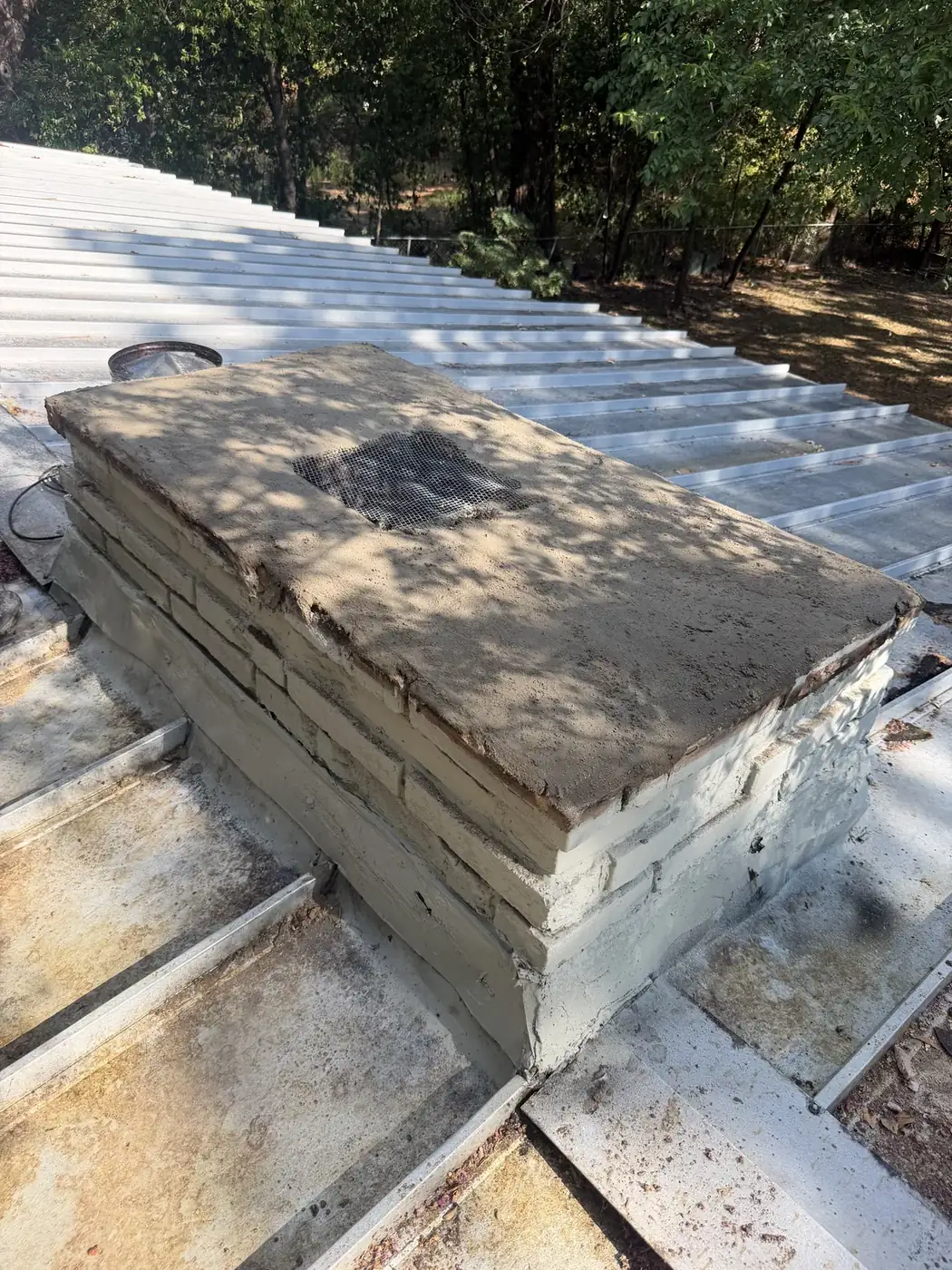
Nest material and debris removed, the flue cleaned, and a properly sized cap with mesh quoted so it cannot repeat.
Squirrel removal, answered.
How much does squirrel removal from a chimney cost in DFW?
It comes down to where the animal is, whether there is a nest with young, and how much nesting material has to be cleared afterwards. Those are very different jobs, so we camera-scan first and give you an exact written figure in a free estimate before any work begins.
Can I get it out myself?
We would strongly advise against it. Opening a damper with a frightened squirrel above it puts the animal in your living room, and a cornered squirrel bites. There is also a real chance of young you cannot see.
Will it leave on its own?
Usually not. A smooth clay or metal liner gives a squirrel nothing to climb, which is why it fell in and stayed. Waiting typically ends with a dead animal on the smoke shelf and an odor problem instead.
Is it legal to just seal the chimney?
Sealing an animal inside is inhumane and, with protected species such as chimney swifts, illegal under the Migratory Bird Treaty Act. We remove first, then close the entry point.
How do I stop it happening again?
A correctly sized cap with mesh, fitted to your flue. It is the single most effective thing you can do, and it also keeps rain off the damper and smoke shelf.
Related wildlife work.
Clean the part your last sweep skipped.
Book a free estimate — we'll photograph your smoke chamber and give you an exact, upfront price.
(469) 771-7000One call keeps the fire where it belongs.