Storm & Hail Damage Repair
North Texas storms find the weakest part of a chimney in a single afternoon. The damage is usually on top, where nobody looks.
 Texan Flue Chimney
The roof gets inspected. The chimney rarely does.
Dallas–Fort Worth sits in one of the most active hail corridors in the United States. After a significant storm, most homeowners get the roof looked at and stop there — which leaves the single most exposed structure on the house uninspected.
The chimney takes storm damage differently from the roof. It stands proud of every surface, presenting vertical faces to wind-driven hail that a sloped roof deflects, and its components are thinner and more brittle than shingles.
What storms actually damage
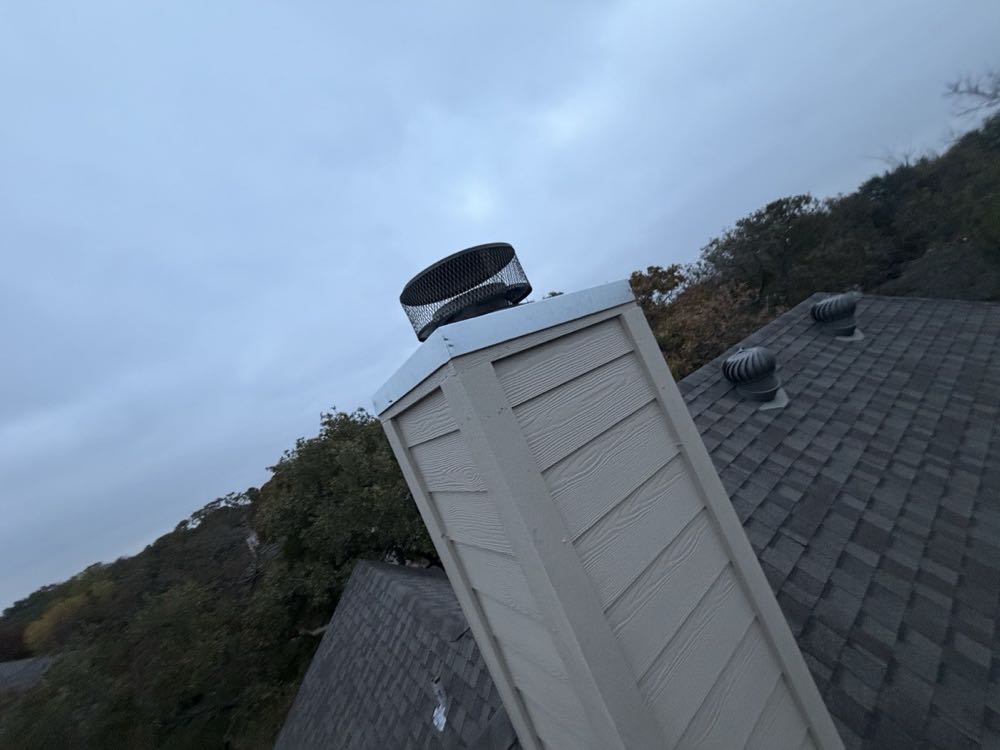
Caps and spark arrestors. A cap is sheet metal on legs. High wind lifts them, and once a cap is gone the flue is an open drain for every subsequent rain.
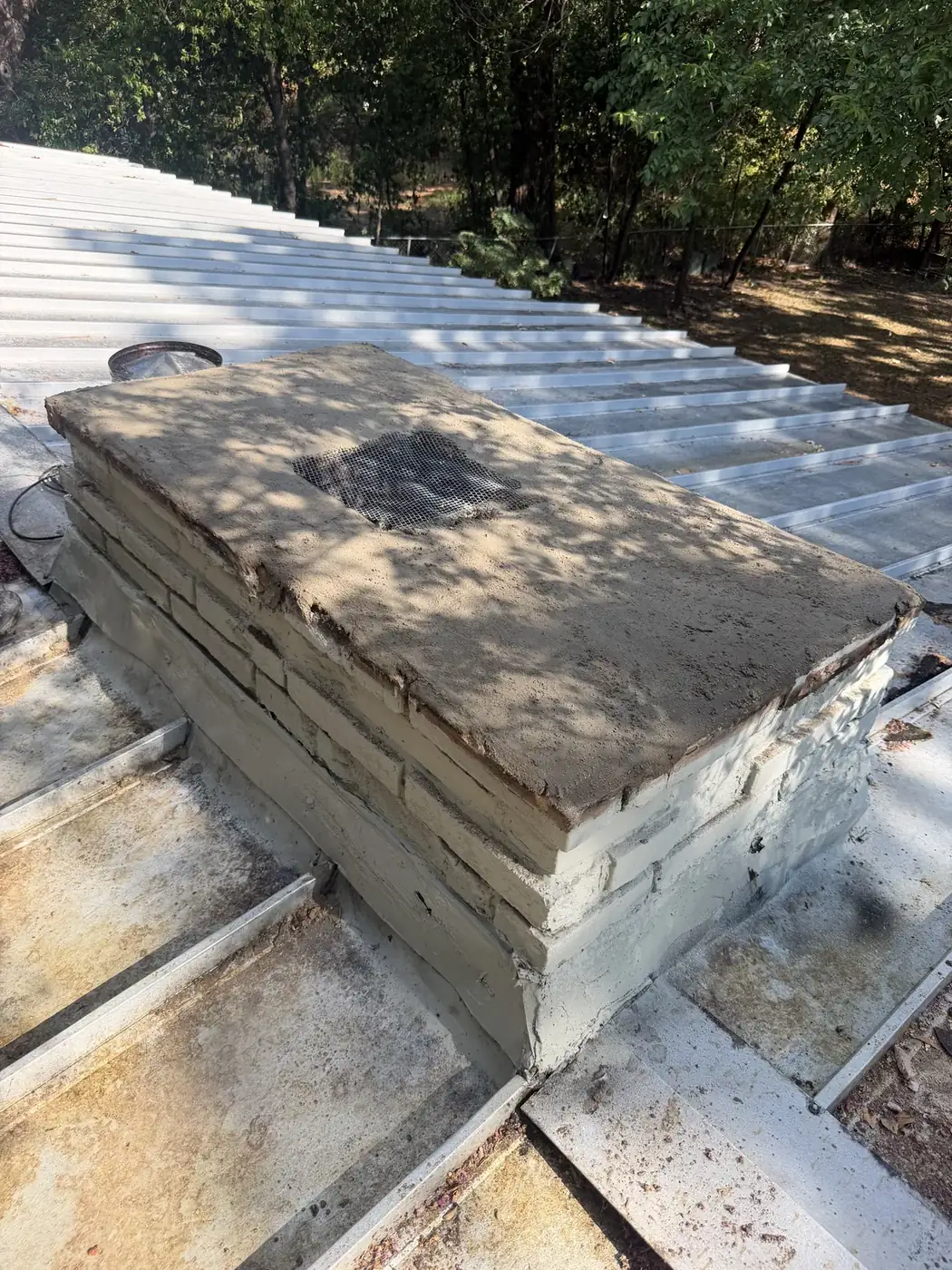
Chase covers. Hail dents a flat metal chase top into a series of small basins that hold water permanently. The cover may look intact from the ground and still be finished.
Crowns. Hail opens existing hairline cracks and starts new ones. A crown that survived ten winters can fail in one storm, and the water goes straight down inside the masonry.
Flashing. Wind lifts and shifts flashing at the roof line — often the same storm that damaged the shingles, which is why chimney flashing is so frequently overlooked in a roof-only claim.
Documentation is the part that matters
Insurance claims turn on evidence. We photograph every component from roof level, date the images, and write findings in plain language that describes what failed and how it is consistent with the storm. That is what an adjuster can work with. We are chimney technicians rather than public adjusters, so we will not tell you what your policy covers — but we will make sure the chimney half of the claim is documented properly instead of summarised in one line.
Where the storm has already let water in, the work continues on our leak repair page.
 Texan Flue Chimney
What to check after a DFW storm.
Cap missing or sitting crooked
The most common wind casualty, and the one that starts every subsequent water problem.
Dents or pooling on the chase cover
Hail turns a flat cover into basins that hold water until they find a seam.
Fresh cracks in the crown
Hail widens hairline cracks fast. New water staining below is the giveaway.
Flashing lifted at the roof line
If the roof took wind damage, the chimney flashing almost certainly did too.
Brick or mortar debris on the roof
Impact spalling knocks the face off brick and opens joints to water.
Water in the firebox after the storm
Direct evidence something above failed, and it will not stop on its own.
Document first, repair second.
Roof-Level Inspection
Every component photographed from close range — cap, chase cover, crown, flashing and masonry — with dated images.
Written Findings
A plain-language report describing what failed and how the damage presents, in a form an adjuster can read.
Interior Check
Camera scan of the flue and inspection of the firebox and damper to catch water that has already entered.
Repair to Match
Replacement caps, custom chase covers, crown work or reflashing — with photographs of the completed repair.
Storm damage, answered.
How much does storm chimney repair cost?
It depends on which components failed and how far water travelled. We inspect and document first, then give you a free written estimate — and the inspection report is yours whether or not you use us for the repair.
Will my insurance cover it?
We cannot answer that, and anyone who promises you a covered claim before reading your policy is guessing. What we can do is document the damage thoroughly so your insurer is deciding on evidence rather than a vague description.
My roofer already handled the storm claim. Do I need this?
Frequently, yes. Roofers document roofs. Chimney caps, chase covers and crowns are chimney components, and they are the parts most often left out of a roof-only claim.
How soon should I have it looked at after a storm?
Quickly. An open flue or a cracked crown lets water in with every rain that follows, and the secondary damage typically costs more than the original repair.
Can you tell if damage is from this storm or older?
Often, yes. Fresh impact damage looks different from long-term weathering — bright metal in dents, clean crack faces, sharp spalling. We describe what we see rather than characterising it for you.
Common post-storm repairs.
Clean the part your last sweep skipped.
Book a free estimate — we'll photograph your smoke chamber and give you an exact, upfront price.
(469) 771-7000One call keeps the fire where it belongs.