Chimney Odor Removal
The smell is a symptom with four possible causes. Masking it changes nothing. Finding which one is at work changes everything.
 Texan Flue Chimney
Why it gets worse in a Texas summer.
The call almost always comes in July, and it almost always sounds the same: the fireplace has not been used since February, and the house smells like a campfire. That timing is the clue, not a coincidence.
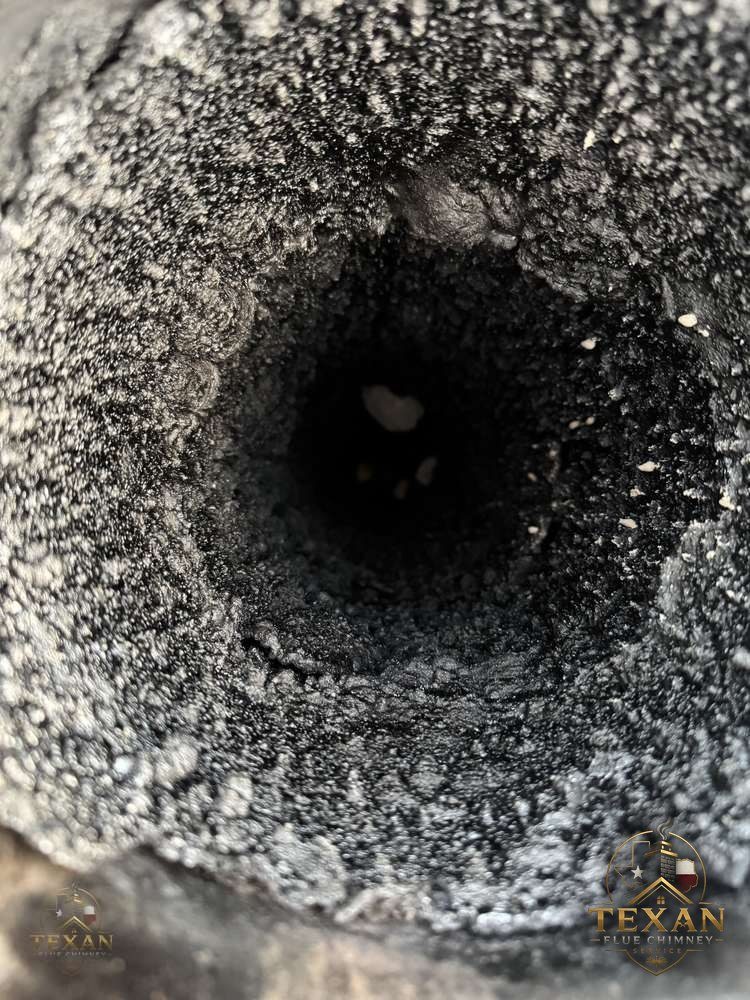
Creosote is hygroscopic — it pulls moisture out of the air. When Dallas–Fort Worth humidity climbs, creosote deposits in the flue absorb it and release the odor they have been holding all winter. Add air conditioning, which lowers indoor pressure relative to outside, and the chimney reverses: instead of air going up the flue, flue air comes down into the room.
Cause one: creosote saturation
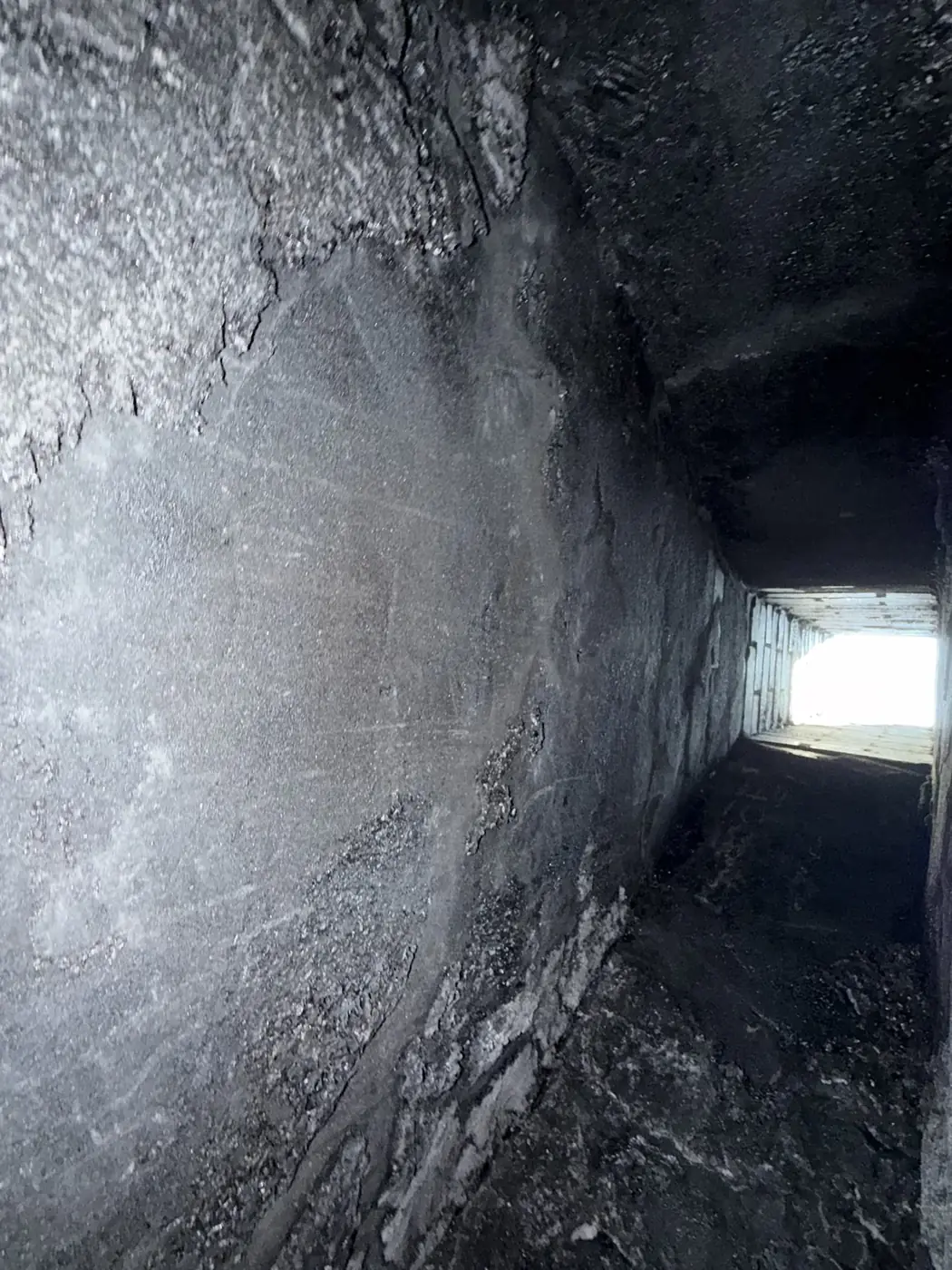
The most common by a wide margin, and the most straightforward. Years of accumulated creosote in the flue and smoke chamber hold odor that humidity releases. A thorough sweep removes the source. Where buildup has hardened into glazed stage-three creosote, ordinary brushing will not touch it and deep creosote removal is what actually clears it.
Cause two: negative house pressure
Modern homes are tight. Run a bathroom fan, a range hood, a dryer and the air conditioning, and the house pulls make-up air from wherever it can find it — frequently straight down the chimney. Here the flue may be perfectly clean and the odor still arrives. The fix is a top-sealing damper that closes the flue at the crown rather than at the throat, plus addressing whatever is depressurising the house.
Cause three: animals
Birds, squirrels and raccoons nest in uncapped DFW flues every spring. Nesting material, droppings and occasionally a dead animal produce an odor no sweep will fix, because the problem is not soot. This needs humane removal and then a cap so it does not repeat.
Cause four: moisture
Water entering through a failed crown, cap or flashing soaks masonry and mixes with soot to produce a distinctly sour, musty smell that intensifies after rain. If your odor tracks the weather rather than the thermostat, it belongs with a leak diagnosis rather than a cleaning.
 Texan Flue Chimney
What the smell is telling you.
Worse in humid weather
Classic creosote saturation. The deposits are absorbing moisture and releasing what they hold.
Worse with the AC running
Negative pressure. The house is pulling air down the flue instead of pushing it up.
Sour or musty, not smoky
Moisture. Water is reaching masonry somewhere and mixing with soot.
Sharp and organic
Animals. Nesting material or a carcass in the flue, and no amount of sweeping addresses it.
Only when the front door opens
Pressure differential across the house pushing flue air into the room.
Present year round
Usually heavy long-term buildup that has never been properly removed.
Diagnose first, deodorise never.
Identify the Pattern
When the smell appears tells us most of what we need. Weather, season and which appliances are running all narrow it.
Camera the Flue
A full scan shows buildup levels, moisture staining and anything living or nesting in the chimney.
Remove the Source
Sweep, deep-clean, remove animals or repair the water entry — whichever the diagnosis actually calls for.
Close the Loop
A top-sealing damper or cap where pressure or animals were the cause, so the problem does not return next summer.
Chimney odor, answered.
How much does it cost to get rid of a chimney smell?
It depends entirely on the cause. A sweep, an animal removal and a leak repair are very different jobs. We diagnose first and give you a free written estimate for whichever one your chimney actually needs.
Will a chimney sweep fix the smell?
If creosote is the cause, yes, and that is the most common case. If the cause is negative pressure, animals or water, sweeping a clean flue will not change anything — which is why we look before we quote.
Why does it only smell in the summer?
Creosote absorbs humidity and releases odor, and air conditioning lowers indoor pressure so flue air flows down into the room instead of up. Both peak in a DFW summer at the same time.
Do chimney deodorants work?
Only as a temporary mask, and they can make diagnosis harder. Nothing sprayed into a flue removes saturated creosote, a nest or standing water.
What is a top-sealing damper?
A damper that closes at the top of the flue rather than at the throat, sealing with a gasket. It stops downdrafts, odor and animals far more effectively than a throat damper, and it saves conditioned air year round.
What usually solves it.
Clean the part your last sweep skipped.
Book a free estimate — we'll photograph your smoke chamber and give you an exact, upfront price.
(469) 771-7000One call keeps the fire where it belongs.