
Chimney Waterproofing
Brick drinks water — every storm, every sprinkler pass, every humid August night. A breathable siloxane sealer teaches your chimney to shed rain instead of absorbing it, for about a decade per treatment.
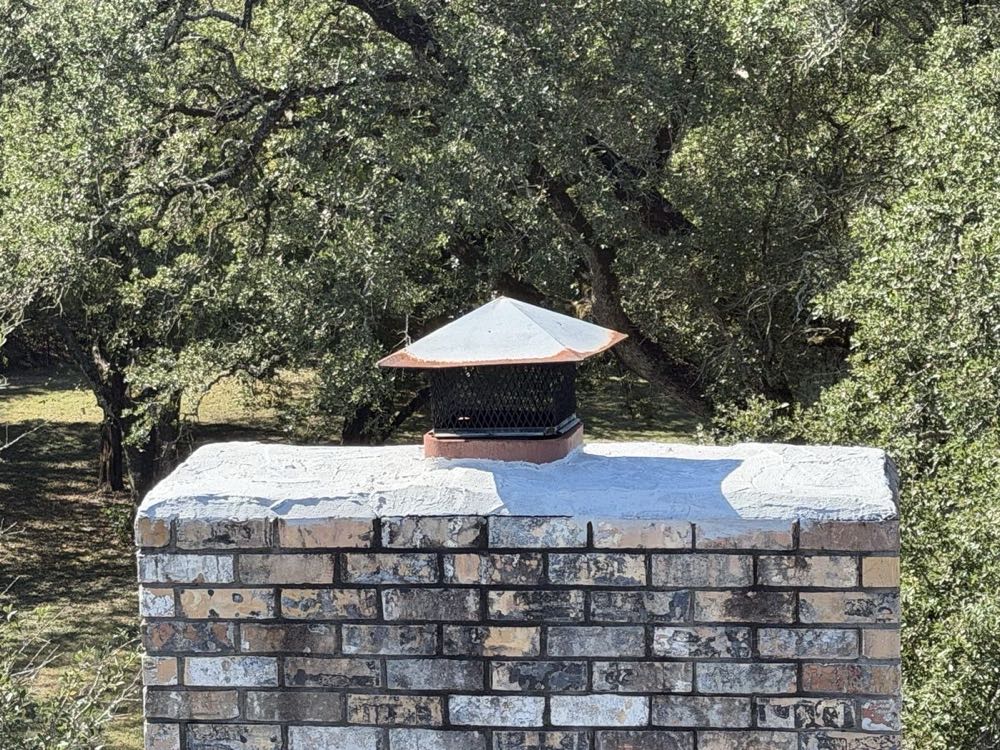
What is chimney waterproofing?
Chimney waterproofing is a professional treatment that makes your masonry repel liquid water while still letting it breathe. Here's why it matters: brick and mortar are porous, like a hard sponge. A single unsealed chimney can absorb gallons of water in one North Texas storm — and unlike the brick on your house walls, the chimney takes weather on all four faces plus the top, with no roof overhang to shelter it. It is, quite literally, the most weather-beaten masonry you own.
Now run the freeze–thaw math. Water expands about nine percent when it freezes. Every winter cold snap turns the moisture inside your brick into millions of microscopic wedges, prying the material apart from within. DFW might see a dozen or more freeze–thaw swings in a single winter — and each one compounds the last. Add expansive clay soil rocking the stack and spring hail driving rain sideways into every pore, and you see why unsealed chimneys here age twice as fast as the house around them. Water is the villain in every masonry story; waterproofing is how you write it out of yours.
Breathable siloxane vs. film sealers — the critical difference
We apply vapor-permeable siloxane/silane sealers engineered for masonry. They penetrate the brick and mortar and bond inside the pore structure, so rain beads and sheds off the surface — but water vapor already inside the masonry can still escape outward. Compare that with paint-on and film-forming sealers from the hardware store: they seal the surface in both directions, trapping existing moisture inside the wall. Come the first hard freeze, that trapped water becomes spalled brick faces — the sealer meant to protect the chimney ends up shelling it. Breathable chemistry, matte finish, no gloss, no color change: the chimney looks untouched and performs like new.
Part of a system, on a 10-year cycle
Sealer is a shield, not a patch. If the crown is cracked, the flashing has failed or mortar joints are open, we repair those first — then seal the whole stack so the repairs stay dry and last. A professional-grade treatment protects for roughly 10 years, and we document the application with photos and put the re-treatment date on record, so protecting your chimney becomes a once-a-decade line item instead of a recurring repair bill.
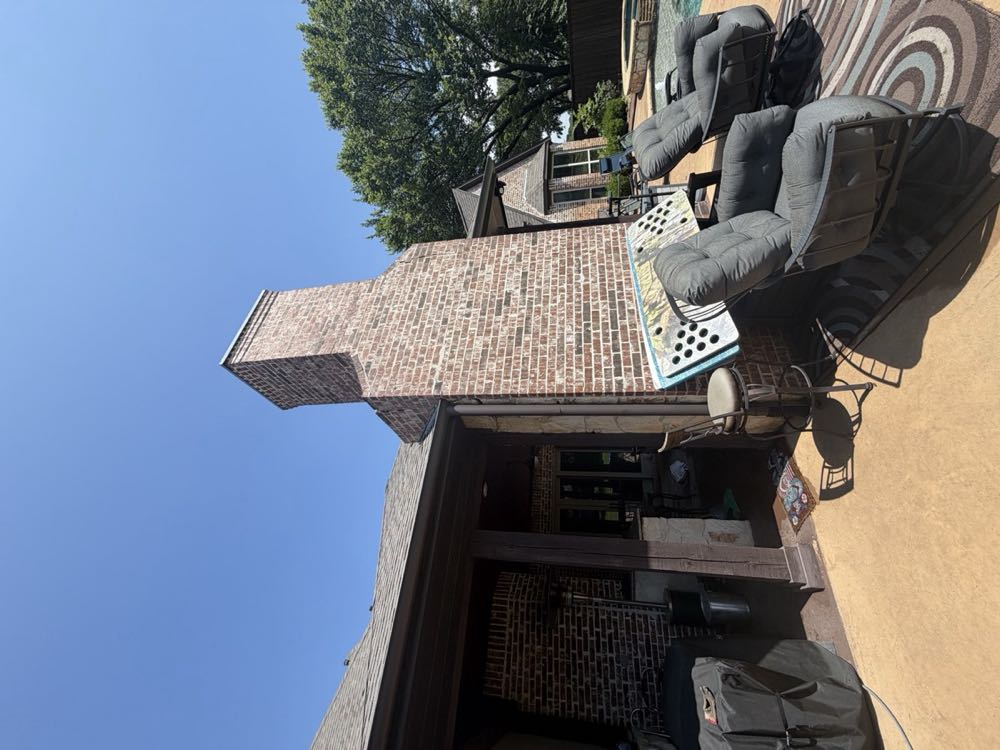
Signs your chimney is drinking water.
Dark, damp brick after rain
Masonry that stays visibly wet for days is absorbing water instead of shedding it.
White chalky staining
Efflorescence is minerals left behind by water moving through the brick — proof moisture is inside the wall.
Flaking brick faces
Early spalling means freeze–thaw is already prying the brick apart from within.
Musty fireplace smell
A damp, earthy odor after storms means moisture is reaching the flue and firebox.
Crumbling mortar joints
Soft, sandy joints erode fastest on saturated chimneys — water dissolves the binder year after year.
Moss, mildew or green staining
Growth on the shaded face of the stack only survives where the masonry stays wet.
Repaired first, sealed right, protected for a decade.
Moisture Inspection
We check the crown, flashing, joints and brick for active leaks and saturation, with photos of everything we find.
Repairs Before Sealer
Cracked crowns, open joints or failed flashing get fixed first — sealing over an active leak just hides it.
Upfront Price
One clear, all-in number for prep, repairs and treatment, approved by you before we start.
Saturation Application
Breathable siloxane applied flood-coat to the entire stack, documented with photos and your 10-year re-treatment date.
Chimney waterproofing, answered.
How much does chimney waterproofing cost in DFW?
Most chimney waterproofing jobs in Dallas–Fort Worth run $300–$900, depending on the size of the stack and how much prep the masonry needs first. You get an exact, all-in price after a $49 inspection — before any product touches the brick.
What do you use to waterproof a chimney?
A vapor-permeable siloxane or silane sealer made for masonry. It soaks into the brick and mortar and bonds inside the pores, so the surface sheds liquid water while water vapor can still escape outward. That breathability is the whole point — it protects the brick without changing how it looks.
Why not just use a paint-on sealer from the hardware store?
Film-forming sealers and paints sit on the surface and seal in both directions — rain stays out, but so does the moisture already inside the masonry. Trapped moisture is exactly what freeze–thaw cycles turn into spalled brick faces. A film sealer can quietly do more damage than no sealer at all.
How long does chimney waterproofing last?
A professional-grade siloxane treatment protects for about 10 years — many products carry a 10-year warranty. We photograph the application and recommend re-treating on that cycle, usually timed with a routine chimney inspection.
Should waterproofing be done before or after masonry repairs?
After. Sealer is a shield, not a repair — applied over cracked crowns, failed flashing or open mortar joints, it just hides an active leak. We fix the crown, flashing and joints first, let fresh mortar cure, then seal the whole stack so the repairs last.
Often paired with waterproofing.
Teach your chimney to shed water, not drink it.
Book a $49 inspection and get an exact, upfront price on a decade of protection — often applied the same day.
(469) 980-1178One call keeps the fire where it belongs.