
Smoke Chamber Cleaning
The funnel above your firebox catches more creosote than any other part of the chimney — and most sweeps never touch it. We clean it right, and prove it with photos.
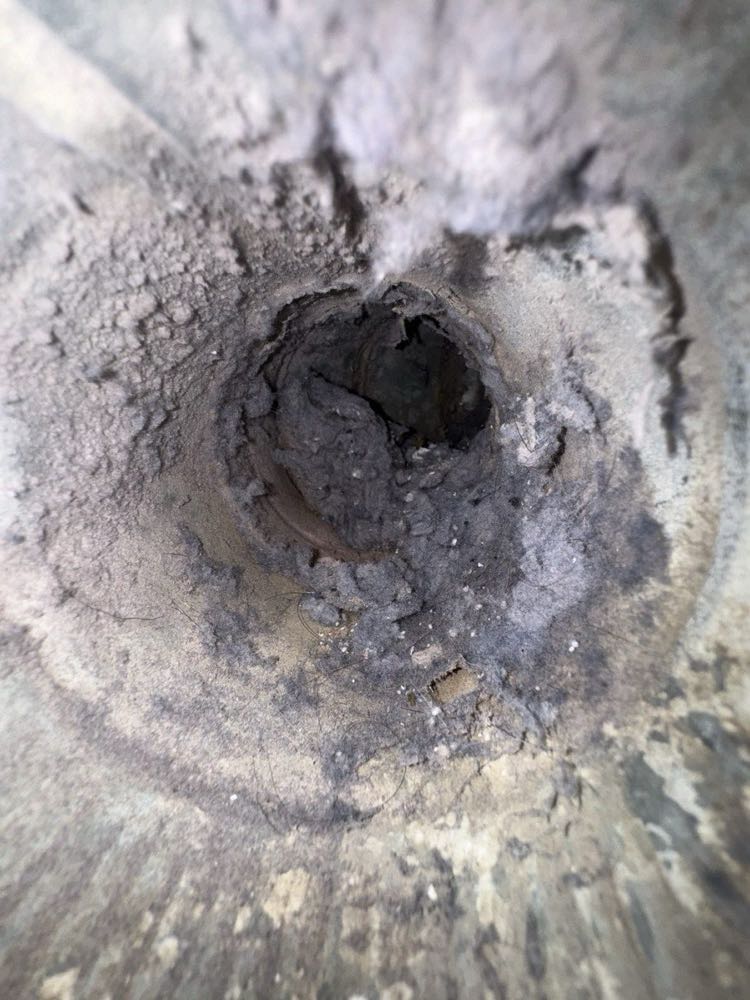
What is the smoke chamber?
Look up past your damper and you'll find a space most homeowners never think about: the smoke chamber, the funnel-shaped zone that squeezes smoke from the wide top of the firebox into the narrow bottom of the flue. In most masonry fireplaces it's built from corbelled brick — courses stepped inward like an inverted staircase — and every wisp of smoke your fireplace has ever produced has passed across those steps.
That geometry is the problem. Each stepped ledge is a shelf where cooling smoke condenses and creosote settles, layer after layer, directly above the hottest part of your fireplace. A creosote fire that starts in the smoke chamber burns just inches from the framing hidden behind the fireplace wall.
Why basic sweeps miss it
A flue brush is sized to fit the flue — usually a 8x12-inch tile or a round liner. When that brush passes through the smoke chamber, a space two or three times wider, it touches nothing. Cleaning the chamber properly means working dedicated chamber tools and rotary heads up from the firebox, scrubbing each corbelled shelf and the smoke shelf behind the damper by hand where needed. It's slower, dirtier work than sweeping a straight flue, which is exactly why low-bid sweeps skip it. Texan Flue treats the chamber as its own job, under full HEPA containment, with before-and-after photos so you're not taking anyone's word for it.
The parging connection
NFPA 211 says smoke chamber walls should be parged smooth — coated with an insulating refractory mortar that turns the stepped staircase into a sleek funnel. Parging improves draft, eliminates the ledges that catch creosote, and adds a heat shield between the fire and nearby framing. Many North Texas chimneys, especially older ones, were never parged at all — and clay-soil movement and freeze–thaw cycles crack the coatings that do exist. We can only judge parging on clean brick, so cleaning comes first; if the chamber needs coating or the firebox below shows damage, firebox repair gets a straight-forward, upfront quote with photos to match.
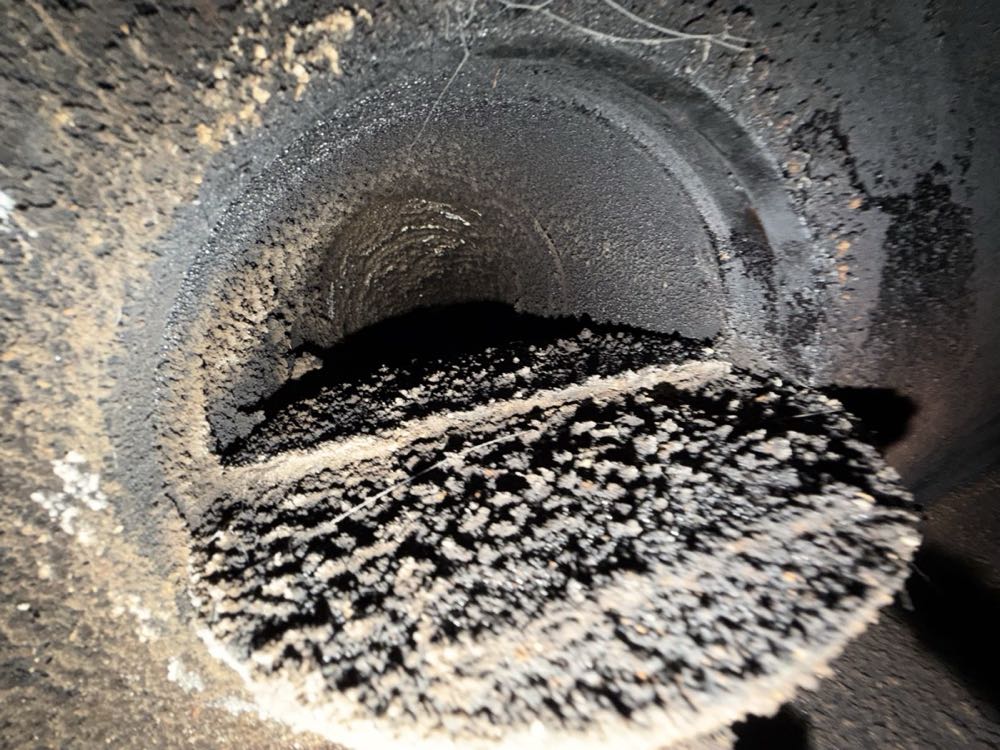
Signs your smoke chamber needs attention.
Black buildup above the damper
Shine a light up past the damper — heavy black coating on stepped brick is chamber creosote.
Smoke rolling into the room
A rough, constricted chamber breaks up the draft, pushing smoke out of the firebox instead of up.
Smoky odor when it rains
Humid DFW air pulls the smell out of creosote-soaked chamber brick and sends it into the house.
Debris on the smoke shelf
Fallen creosote flakes and mortar crumbs collecting behind the damper point to trouble above.
Visible bare, stepped brick
If you can see staircase-like ledges with no smooth coating, the chamber was never parged to standard.
Your last sweep skipped it
If previous receipts never mention the smoke chamber, assume it's carrying years of buildup.
The hidden funnel, cleaned and documented.
Look & Photograph
We inspect the chamber from the firebox, photograph the buildup and corbelled shelves, and show you what's up there.
Contain & Protect
The hearth is sealed and a HEPA vacuum runs throughout — chamber cleaning is dusty work that stays in our equipment.
Detail Cleaning
Dedicated chamber tools scrub each stepped ledge and the smoke shelf, working up from the firebox to the flue.
Assess the Parging
On clean brick we evaluate the chamber's coating against NFPA 211 and give you photos plus an upfront quote if it needs work.
Smoke chambers, answered.
How much does smoke chamber cleaning cost in DFW?
Smoke chamber cleaning typically runs $150–$350 in Dallas–Fort Worth, depending on the amount of buildup and how the chamber was built. We photograph the chamber, show you exactly what's up there, and quote an exact all-in price before any work begins.
What exactly is the smoke chamber?
It's the funnel-shaped space between the top of your firebox and the bottom of the flue. Its stepped brick walls compress smoke from the wide firebox into the narrow flue — and because every bit of smoke passes through it, it collects creosote faster than almost any other part of the chimney.
Doesn't a regular chimney sweep clean the smoke chamber?
Often not. A flue brush is sized for the flue, so it passes straight through the wide, stepped chamber without touching its walls or shelves. Cleaning it properly takes dedicated chamber tools worked from the firebox — a step budget sweeps routinely skip. Texan Flue cleans it as its own job, with before-and-after photos.
What is parging and why does it come up?
Parging is a smooth, insulating mortar coat applied over the chamber's stepped brick. NFPA 211 calls for smoke chambers to be smooth-parged: it improves draft, removes the creosote-catching ledges, and shields nearby framing from heat. Cleaning reveals the chamber's true condition — if the parging is missing or failing, we'll show you and price the repair upfront.
How often should the smoke chamber be cleaned?
Have it checked at every annual sweep and cleaned whenever buildup approaches 1/8 inch — the same standard as the flue. Chimneys that burn regularly through a DFW winter often need chamber attention every year or two.
Often paired with chamber cleaning.
Clean the part your last sweep skipped.
Book a $49 inspection — we'll photograph your smoke chamber and give you an exact, upfront price.
(469) 980-1178One call keeps the fire where it belongs.