Wood-Burning Fireplace Service
A real wood fire deserves a fireplace that's ready for it. We inspect and clean the firebox, restore failing mortar joints, clear the smoke shelf, tune the draft and check every component from grate to hearth — with photos of everything we find.
What does wood fireplace service include?
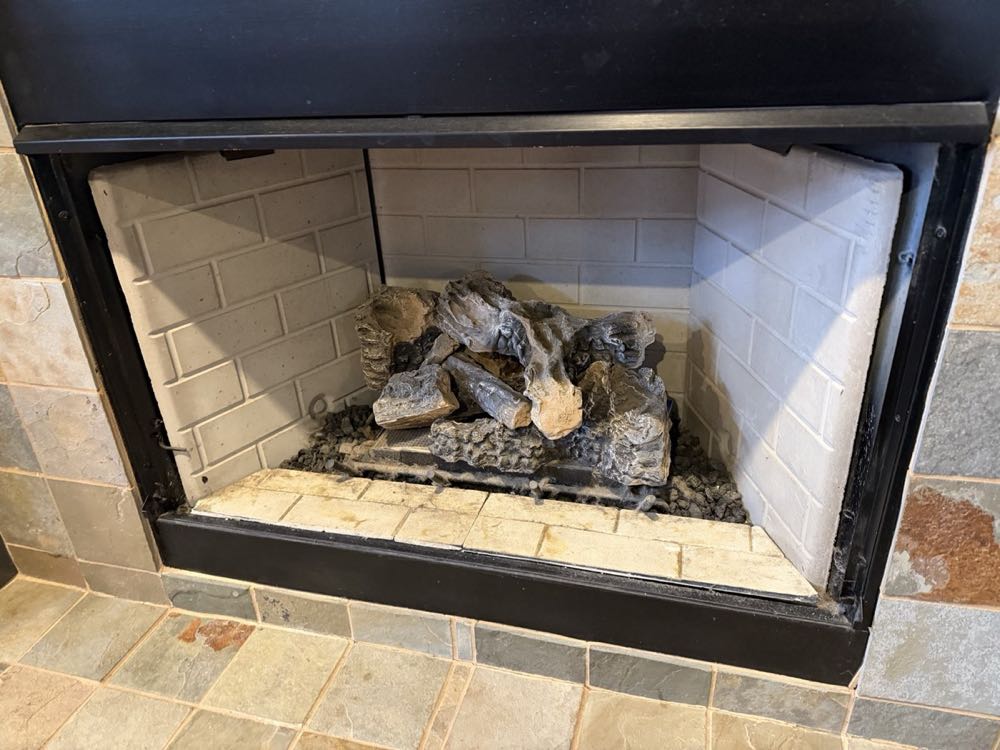
A wood-burning fireplace is a system, and the flue is only half of it. Our service visit covers the half you actually sit in front of: we inspect and clean the firebox, checking every firebrick and mortar joint for cracks and erosion; we clean out the smoke shelf — the hidden ledge behind the damper where debris, soot and animal nesting collect; we examine the smoke chamber entrance, test the damper's travel, and check the grate, spark screen, doors and hearth extension for the wear that turns into a hazard.
The stakes are higher than they look. The firebox is the only thing standing between a 1,200°F fire and the wood framing of your house. Mortar joints between firebricks erode a little with every burn — and once a joint opens up, heat and combustion gases start working on the masonry and lumber behind it. Small refractory mortar repairs, made early, are what keep a fireplace from becoming a rebuild.
Refractory mortar repairs
Ordinary mortar can't live in a firebox — it needs refractory mortar rated for direct flame. We rake out failing joints and repoint them with the correct high-temperature material, so the firebox goes back to being the sealed, heat-proof vault it was built to be. Deeper damage — shifted firebrick, cracked panels in prefab units — moves into firebox repair territory, and we'll show you photos and price it upfront if that's what we find.
Draft problems, actually diagnosed
Smoke rolling into the room isn't bad luck — it has a cause. A cold flue that needs priming, a damper that only half-opens, a fireplace opening too large for its flue, or a tightly-sealed modern home starving the fire of air. Each has a different fix, from a smoke-shelf cleanout to a smoke guard to an outside-air solution, and guessing wrong wastes money. We test, identify the real cause and fix that.
Burn the right wood
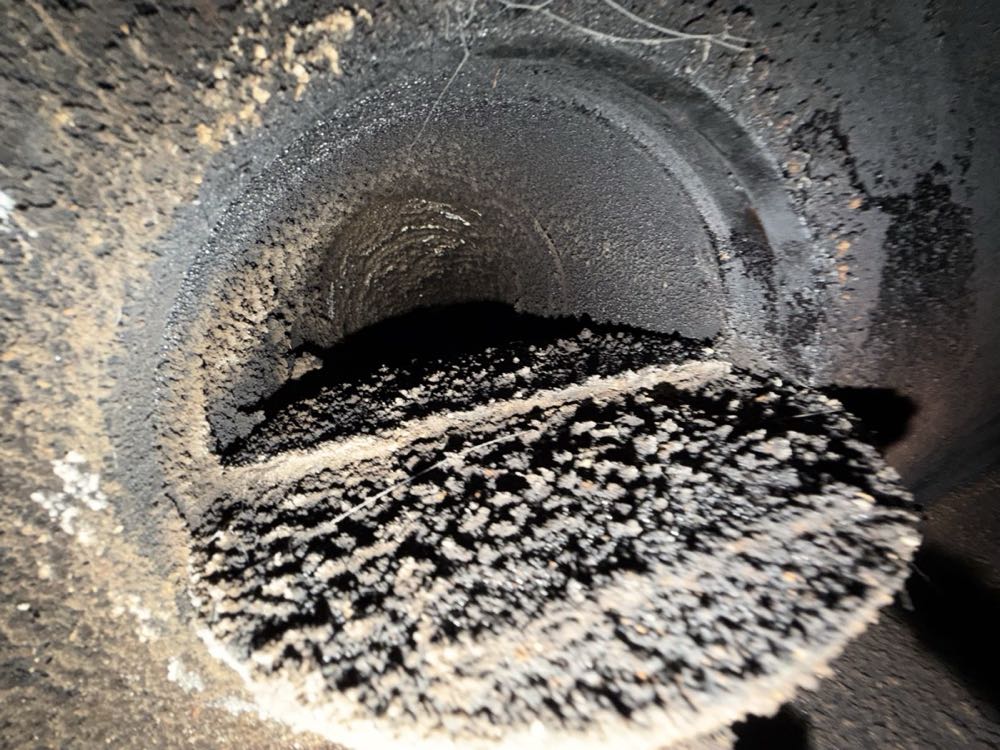
Half of fireplace performance is fuel. Seasoned hardwood dried below 20% moisture lights easily, burns hot and keeps creosote to a minimum. Green or rain-soaked wood smolders, coats your flue in creosote and blackens the glass and brick. We're happy to check your stack with a moisture meter during the visit and show you what your firewood is actually doing to your chimney.
Signs your wood fireplace needs service.
Crumbling mortar joints
Sandy debris on the firebox floor or gaps you can slide a coin into mean the refractory mortar is failing.
Smoke enters the room
Smoke rolling past the lintel every time you light up points to a draft, damper or flue-sizing problem.
Hard-to-start fires
Fires that need constant coaxing usually signal a cold or restricted flue — or wood that's nowhere near seasoned.
Debris behind the damper
Twigs, nesting material or a mound of soot on the smoke shelf restrict draft and can catch fire.
Cracked or shifted firebrick
Any visible crack or movement in the firebox walls is a path for heat toward the framing behind them.
Rusted grate or torn screen
A failing grate collapses mid-burn, and a damaged spark screen lets embers pop onto the floor.
Inspected, cleaned, repaired — ready to burn.
Full Inspection
Firebox, mortar joints, damper, smoke shelf, grate, screen and hearth — photographed so you see what we see.
Deep Clean
Firebox swept and vacuumed, smoke shelf cleaned out, and glass and doors cleaned — dust-free, with the room protected.
Upfront Price
Any refractory repairs or draft fixes are quoted as one all-in number you approve before we start.
Repair & Verify
Joints repointed with true refractory mortar, draft tested, and after photos delivered — ready for the first cold front.
Wood fireplaces, answered.
How much does wood fireplace service cost in DFW?
Most wood-burning fireplace service visits run $150–$500 in Dallas–Fort Worth, depending on scope — a basic firebox cleaning and inspection sits at the low end, while visits that include refractory mortar repairs, smoke-shelf cleanout or draft corrections run higher. You approve an exact, all-in price before we begin.
How is this different from a chimney sweep?
A sweep cleans the flue — the vertical pipe. Fireplace service focuses on everything at eye level and below: the firebox walls and mortar joints, the smoke shelf and smoke chamber entrance, the damper, grate, screen and hearth. Most homes are due for both, and we bundle them in one visit.
Why does smoke come into the room when I light a fire?
Usually one of four things: a cold or partially blocked flue, a damper that isn't opening fully, a house that's too airtight to feed the fire, or an undersized flue-to-opening ratio. Each has a specific fix — from a smoke-shelf cleanout to a smoke guard — and we diagnose which one your fireplace actually has before recommending anything.
What firewood should I burn in North Texas?
Seasoned hardwood — oak, pecan or hickory — split, stacked off the ground and dried for 9–12 months, with moisture below 20%. Wet or green wood smolders, produces creosote fast and never puts out real heat. A $20 moisture meter is the best fireplace accessory a wood burner can own.
How often should a wood-burning fireplace be serviced?
Once a year, ideally before the first fire of the season — that's the NFPA 211 standard. Annual service catches failing mortar joints and creosote buildup while they're cheap to fix, and confirms the fireplace is safe to light before you need it.
Often paired with fireplace service.
Be ready before the first cold front.
Book a $49 inspection and get your fireplace cleaned, repaired and burn-ready — with an exact, upfront price.
(469) 980-1178One call keeps the fire where it belongs.